
Belfast Man Releases Biography After Making History
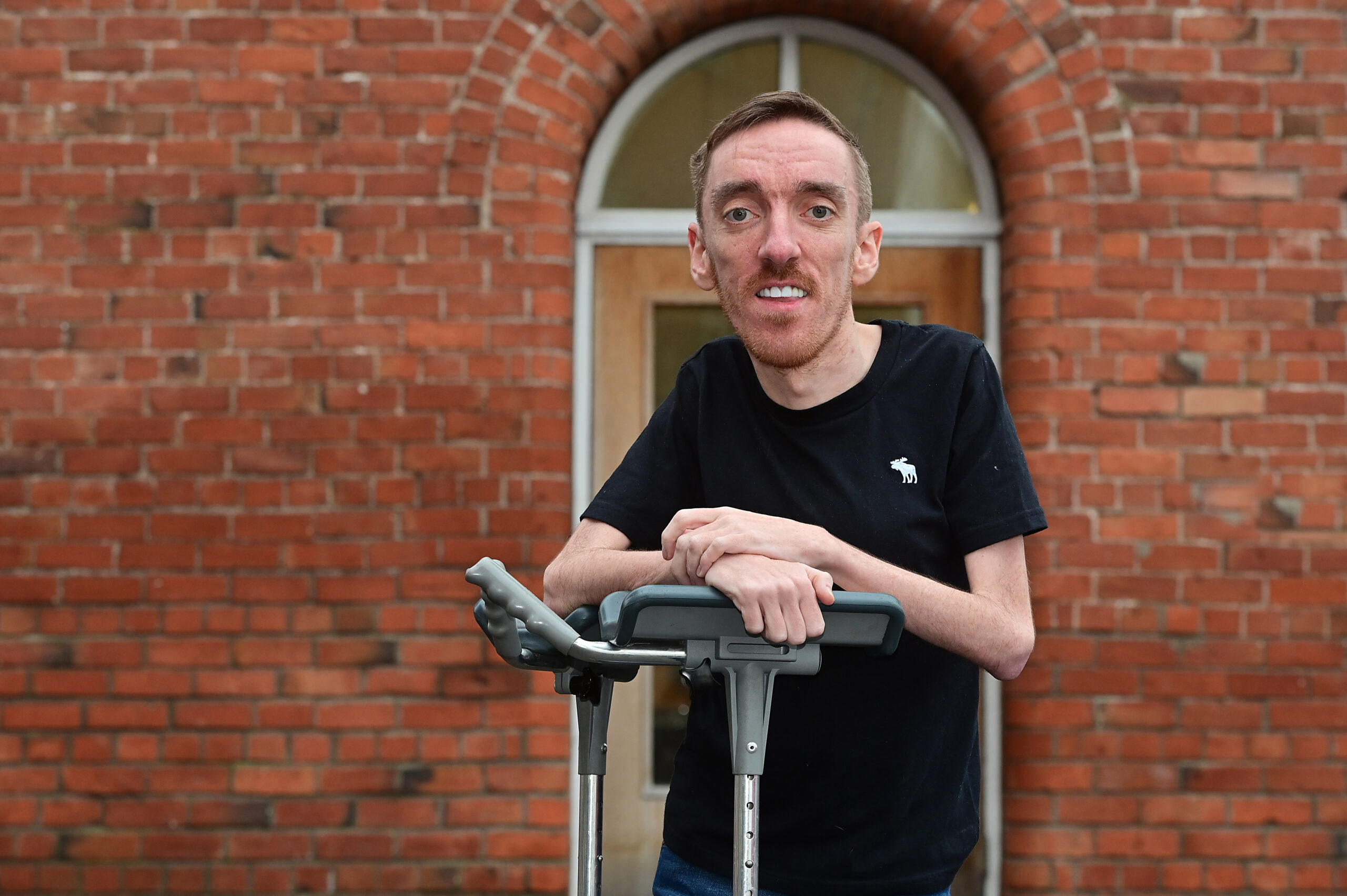
A man who was once told he would likely never walk has launched a memoir after becoming the first disabled pilot to land a plane solo at Belfast International Airport.
Matthew Monaghan, from Newtownabbey, has released The Weight of Progress, a deeply personal account of life with a rare neuromuscular condition, the barriers he faced growing up, the devastating consequences of a medical procedure that left him fighting for his independence all over again, and the extraordinary journey that eventually saw him take to the skies.
The book charts a life shaped by physical limitation but never defined by it. From childhood, Matthew, 36, found himself battling assumptions that disability also meant lack of intelligence.
He writes about having to fight for the right to be educated fairly and for the chance to prove that his ambitions were not unrealistic, just inconvenient to systems that were not built with him in mind.
That experience becomes one of the strongest threads in the memoir. In the book he remembers one particular comment his mum made that has always stuck with him: “Matthew, you may not understand yet, but you are being discriminated against.”
It was an early lesson in how easily disabled people can be underestimated, sidelined or made to feel like a problem to be solved rather than a person to be supported.
In his book, Matthew writes candidly about the more subtle humiliations of growing up visibly different, including one sports day moment that stayed with him for years.
“I was very young when it happened, probably about six or seven. I remember winning the egg and spoon race and, for a child of that age, it should have been one of the happiest, most proud moments.
“Not for me, a teacher had glued the egg to my spoon. The memory of feeling so awfully bad that I had cheated will never leave me. I desperately wanted to play fairly, even if that meant losing the race.
“The victory wasn’t mine. It belonged to the glue.”
But The Weight of Progress doesn’t rest on one chapter of Matthew’s life. The memoir moves through adolescence, friendships, work, sexuality and independence, showing how prejudice often follows disabled people into every part of life, not just school or healthcare.
The most dramatic section of the book centres on 2015, when Matthew’s life changed suddenly and brutally. Just as adulthood was beginning to feel stable, a routine Botox injection designed to improve his joint flexibility and mobility, which was expected to ultimately improve his balance and walking.
In the book Matthew explains how the treatment ironically did the complete opposite and triggered a devastating decline in his health.
Within days, Matthew was clinging on to the life he once knew, he was struggling to walk, breathe and swallow. The collapse left him terrified and desperate for answers.
“This wasn’t burnout. This wasn’t just ‘fatigue’. Something had gone catastrophically wrong” he explained.
What followed was not only physical trauma but a prolonged fight to be believed. Matthew was faced with months of fear, hospital visits and dismissal, as well as the anger of his family as his condition worsened.
In the book Matthew recounts one particularly confrontational moment when his mother tells a consultant: “He’s not coping. He can barely walk. He can’t breathe properly. You put this poison in him. What are you going to do about it?”
Eventually, a specialist confirmed what Matthew had known in his own body all along. “This isn’t the natural course of your condition,” he said. “This looks like a reaction.”
That validation mattered because The Weight of Progress is as much about the damage caused by disbelief as it is about physical suffering. For Matthew, talking about the psychological toll of losing the life he had built, the humiliation of dependence, and the slow erosion of confidence that comes when a person is repeatedly told their lived reality is not real was an important part of the story.
“I knew my own body, and I knew this wasn’t what I had spent the last 26 years living with, this was new.
“It’s difficult when you are up against medical experts who are not only under pressure themselves, but sometimes consumed and restrained by textbooks, forgetting that sometimes there are exceptions.
“The disbelief in my symptoms and reaction was rigid because no one was willing to accept that what was meant to help had harmed. It sounds grim but medicine can harm and everyone makes mistakes, the problem is, I paid the price.”
Despite this, Matthew’s book is not a story of surrender. He believes that out of that collapse came a new and unexpected direction. He went on to apply for a flying scholarship for disabled people, a decision that would alter the course of his life. Flying became more than a hobby or challenge. It became a route back to himself.
And, in the book he describes the moment the shift became real: “I was going to learn to fly.”
From there, readers can follow his progress through training, self-doubt and determination to a point that once seemed impossible. In one of the book’s most powerful reflections, he said: “Flying wasn’t just something I wanted to do anymore. It was who I was meant to be.”
That sense of purpose would carry Matthew to one of the defining milestones of his life. In 2025, after years of persistence, adaptation and training, he became the first disabled pilot to land a plane solo at Belfast International Airport. It was a landmark moment, not only for him personally, but for what it represented in terms of access, visibility and ambition.
“From being told I’d never walk, to walking unaided. From being told life would be small, to becoming a pilot”, said Matthew: “If this book has done anything, I hope it shows that progress is possible, not just for me, but for anyone staring down their own can’t.’”
Now a pilot, motivational speaker and growing social media commentator, Matthew is using his story to challenge the assumptions that still shape public attitudes to disability.
The Weight of Progress isn’t written as a tidy tale of triumph. It’s a memoir about pain, frustration, identity, exclusion, reinvention and the hard reality that progress often comes at a cost. It’s also a reminder that people are capable of far more than the limits others place on them.
Matthew’s book offers readers a rare combination of emotional honesty and hard-won perspective. He hopes it will resonate not only with those living with disability or chronic illness, but with anyone who has had to rebuild after loss, fight to be believed, or find a new way forward when life veers violently off course.
The Weight of Progress, published by Excalibur Press, is available now on Amazon.